

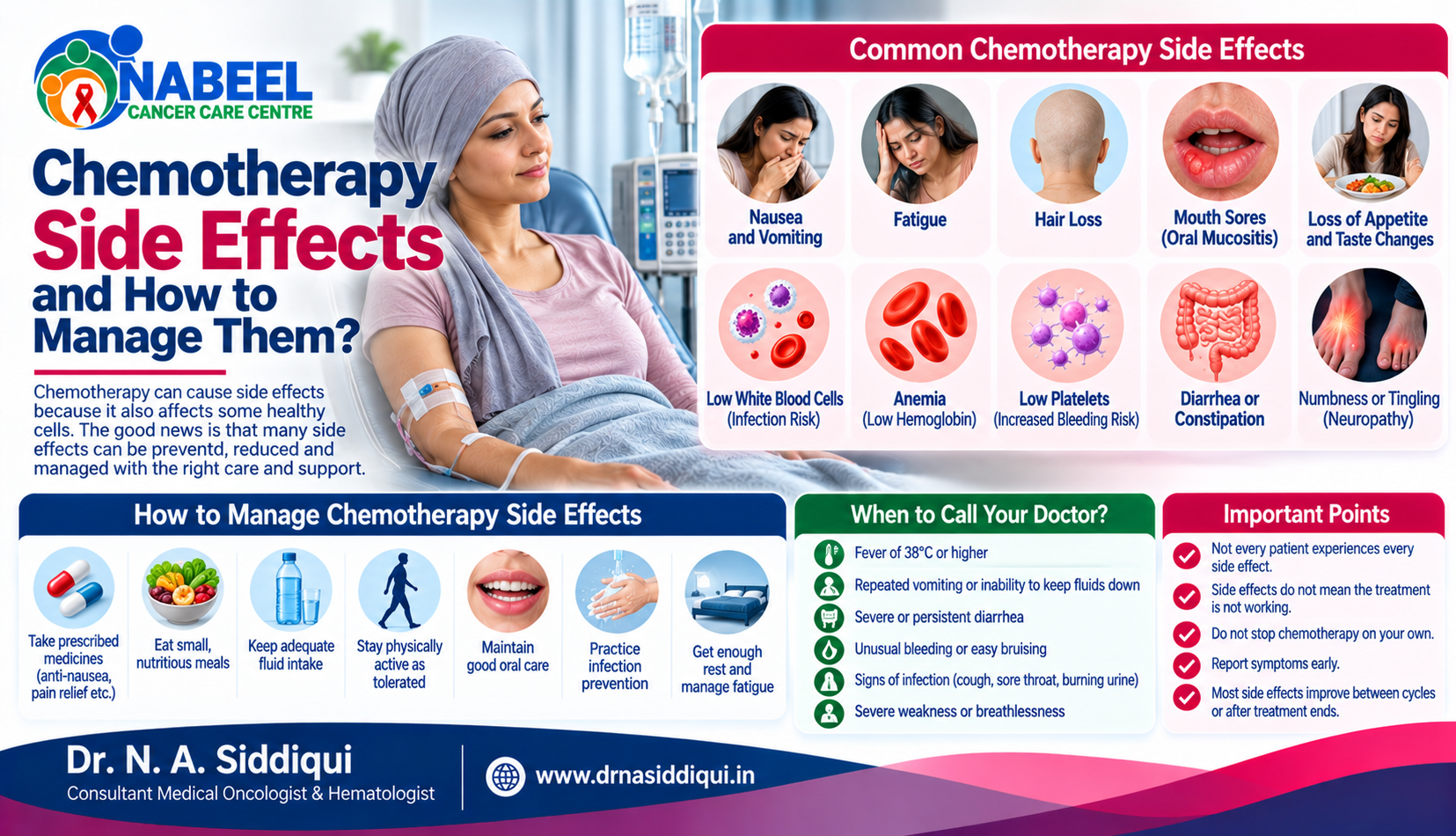
Chemotherapy Side Effects and How to Manage Them
Chemotherapy is an important cancer treatment that uses medicines to destroy cancer cells or stop them from growing.
However, chemotherapy medicines can also temporarily affect healthy cells that divide rapidly, including cells in the digestive tract, bone marrow, mouth and hair follicles.
As a result, some patients experience side effects during treatment.
Common chemotherapy side effects may include:
- Fatigue
- Nausea and vomiting
- Hair loss
- Mouth sores
- Reduced appetite
- Changes in taste
- Low white blood cells
- Increased infection risk
- Anemia
- Low platelets
- Diarrhea
- Constipation
- Numbness or tingling in the hands and feet
- Skin or nail changes
Importantly, not every patient experiences every side effect.
Even two patients receiving the same chemotherapy regimen may feel very different. The type of chemotherapy, dose, treatment schedule, cancer type and overall health can all influence side effects.
Therefore, chemotherapy should not automatically be associated with severe sickness.
Many side effects can now be prevented, reduced or treated with supportive medicines and appropriate monitoring.
Patients who want to understand how chemotherapy is administered can also read about Chemotherapy Treatment in Lucknow with Dr. N. A. Siddiqui.
Why Does Chemotherapy Cause Side Effects?
Chemotherapy is designed to attack cells that grow and divide quickly.
Cancer cells often divide rapidly. However, some healthy cells also naturally grow quickly.
These include cells in:
- Bone marrow
- Mouth
- Digestive tract
- Hair follicles
Therefore, chemotherapy can temporarily affect these normal tissues as well.
For example, damage to rapidly dividing cells in the digestive tract may contribute to nausea, diarrhea or mouth problems. Meanwhile, effects on bone marrow may reduce white blood cells, red blood cells or platelets.
Fortunately, many normal cells recover after treatment.
Consequently, many chemotherapy side effects improve between cycles or after chemotherapy has been completed.
Does Everyone Get Chemotherapy Side Effects?
No.
The side effects of chemotherapy depend on several factors, including:
- The chemotherapy medicine
- Combination of medicines
- Dose
- Frequency of treatment
- Number of treatment cycles
- Other cancer treatments
- Existing medical conditions
- General health
Some people may experience only mild tiredness.
In contrast, others may need medicines or treatment adjustments for nausea, infection, low blood counts or other problems.
Therefore, another patient’s chemotherapy experience does not accurately predict what will happen to you.
Your oncology team can explain which side effects are more likely with your specific treatment.
1. Nausea and Vomiting During Chemotherapy
Nausea is one of the side effects patients often worry about before starting chemotherapy.
However, modern anti-nausea medicines, also called antiemetics, can prevent or substantially reduce chemotherapy-related nausea and vomiting.
These medicines may be given:
- Before chemotherapy
- During treatment
- After chemotherapy
- At home for several days
NCI notes that chemotherapy-related nausea may occur shortly after treatment or may be delayed until a day or more later. Therefore, prescribed anti-nausea medicine should usually be taken according to the planned schedule rather than waiting until nausea becomes severe.
How to Manage Chemotherapy Nausea
Helpful measures may include:
- Take prescribed anti-nausea medicines exactly as advised
- Eat smaller meals instead of very large meals
- Eat slowly
- Avoid foods that trigger nausea
- Keep adequate fluid intake
- Choose bland foods when nausea is worse
- Avoid strong food smells if they trigger symptoms
Additionally, tell your oncology team if nausea remains uncontrolled.
Different anti-nausea medicines work through different mechanisms. Therefore, treatment can sometimes be adjusted if the first approach is not enough.
When Is Vomiting More Concerning?
Contact your oncology team if:
- Vomiting repeatedly continues
- You cannot keep fluids down
- You become dizzy
- Urination becomes significantly reduced
- You develop marked weakness
- You cannot take prescribed medicines
Persistent vomiting can lead to dehydration and electrolyte problems.
Therefore, it should not simply be endured at home.
2. Chemotherapy Fatigue
Fatigue is one of the most common problems during cancer treatment.
Chemotherapy fatigue may feel different from normal tiredness.
Patients may describe:
- Low energy
- General weakness
- Reduced stamina
- Difficulty completing usual activities
- Feeling exhausted despite sleeping
NCI notes that fatigue can be influenced not only by chemotherapy itself but also by anemia, reduced food intake, diarrhea, infection and other treatment-related problems.
How to Manage Fatigue
Helpful strategies may include:
- Plan important activities for times when energy is better
- Take short rest periods when necessary
- Maintain an appropriate sleep routine
- Ask family members for help
- Eat adequate calories and protein
- Maintain fluid intake
- Stay physically active as tolerated
Interestingly, complete inactivity is not always the best solution.
For many patients, light physical activity such as walking—when medically appropriate—may help maintain strength.
However, persistent or worsening fatigue should be reported because doctors may need to look for:
- Anemia
- Infection
- Dehydration
- Poor nutrition
- Sleep problems
- Pain
- Other medical causes
Patients with complex cancer-related fatigue or multiple symptoms may also benefit from Palliative and Supportive Cancer Care in Lucknow.
3. Low White Blood Cells and Infection Risk
Some chemotherapy medicines suppress the bone marrow.
As a result, the number of infection-fighting white blood cells, especially neutrophils, may fall.
This is known as neutropenia.
During periods of neutropenia, even an infection that would normally be minor can potentially become serious.
NCI advises that fever during cancer treatment can require urgent attention because infections in patients with neutropenia can become life-threatening. A temperature of 38°C or higher is an important warning sign.
How to Reduce Infection Risk
Depending on your oncology team’s advice:
- Wash your hands regularly
- Maintain good oral hygiene
- Avoid close contact with people who are unwell
- Follow safe food-handling practices
- Keep wounds and catheter areas clean
- Report signs of infection promptly
Your doctor may also order blood counts before chemotherapy.
If neutrophil levels are too low, treatment may sometimes be delayed or supportive medicines may be used depending on the chemotherapy regimen and clinical situation.
When Should You Call the Doctor?
Contact your oncology team urgently for:
- Fever of 38°C or higher
- Chills
- New cough
- Sore throat
- Burning while urinating
- New diarrhea
- Redness or swelling around a catheter
- Mouth infection
- Rapid deterioration
Importantly, do not routinely take fever-reducing medicines before contacting your oncology team unless you have previously been specifically instructed to do so, because they may temporarily hide an important fever.
4. Hair Loss During Chemotherapy
Hair loss is one of the most visible chemotherapy side effects.
However, not all chemotherapy medicines cause hair loss.
Depending on the drug, patients may experience:
- No hair loss
- Mild thinning
- Partial hair loss
- Complete hair loss
Hair loss may affect:
- Scalp hair
- Eyebrows
- Eyelashes
- Facial hair
- Body hair
Usually, chemotherapy-related hair loss is temporary.
Hair commonly starts growing again after treatment, although its texture or appearance may initially be different.
Managing Hair Loss
Practical steps may include:
- Use a mild shampoo
- Avoid excessive heat
- Avoid harsh hair chemicals
- Use a soft brush
- Protect your scalp from strong sunlight
- Consider a cap, scarf, wig or head covering if desired
Some chemotherapy centers may use scalp cooling for selected treatments.
However, suitability depends on the cancer and chemotherapy regimen.
Therefore, discuss this with the oncology team rather than assuming it is appropriate for every patient.
5. Mouth Sores and Oral Mucositis
Some chemotherapy medicines can damage rapidly dividing cells in the mouth.
As a result, patients may develop oral mucositis, which can cause:
- Mouth sores
- Pain
- Dry mouth
- Burning
- Difficulty eating
- Difficulty swallowing
- Taste changes
NCI notes that chemotherapy can cause mouth and throat problems, including mouth sores, infections and changes in taste.
How to Manage Mouth Sores
Helpful measures may include:
- Use a soft toothbrush
- Maintain gentle oral hygiene
- Keep the mouth moist
- Drink adequate fluids
- Choose soft foods
- Avoid sharp or very crunchy foods
- Avoid extremely spicy foods if they irritate the mouth
- Avoid tobacco
- Avoid alcohol-containing mouth products unless advised
Your doctor may recommend specific:
- Mouth rinses
- Pain medicines
- Antifungal treatment
- Other supportive medicines
Importantly, severe mouth sores can interfere with nutrition and fluid intake.
Therefore, report them early rather than waiting until eating becomes impossible.
6. Loss of Appetite and Taste Changes
Chemotherapy can alter taste and appetite.
Food may taste:
- Metallic
- Bland
- Bitter
- Unusual
In addition, nausea, mouth sores and fatigue may further reduce food intake.
NCI notes that cancer treatment can contribute to appetite loss, nausea, constipation, diarrhea, mouth problems and taste changes, all of which can affect nutrition.
How to Maintain Nutrition
Depending on individual needs:
- Eat smaller frequent meals
- Include protein-rich foods
- Choose calorie-dense nutritious foods if losing weight
- Try foods at different temperatures
- Maintain adequate fluids
- Eat when appetite is strongest
However, there is no single “chemotherapy diet” that is right for every patient.
A patient with diabetes, kidney disease, diarrhea, swallowing problems or another medical condition may need different advice.
Therefore, significant weight loss or persistent eating difficulty should be discussed with the oncology team or an appropriate dietitian.
7. Diarrhea During Chemotherapy
Some chemotherapy medicines can irritate the digestive tract and cause diarrhea.
Diarrhea may lead to:
- Dehydration
- Weakness
- Electrolyte imbalance
- Weight loss
However, not every episode of diarrhea is directly caused by chemotherapy.
Infection, antibiotics and other medicines may also contribute.
How to Manage Chemotherapy-Related Diarrhea
General measures may include:
- Drink adequate fluids
- Follow your oncology team’s dietary advice
- Monitor the number of bowel movements
- Report persistent diarrhea
Do not automatically start anti-diarrheal medicines without knowing what your oncology team recommends for your particular treatment.
Furthermore, diarrhea combined with fever or severe weakness requires prompt assessment.
8. Constipation During Chemotherapy
Some patients develop constipation rather than diarrhea.
Possible contributors include:
- Certain chemotherapy drugs
- Anti-nausea medicines
- Pain medicines
- Reduced mobility
- Low fluid intake
- Reduced food intake
Helpful Measures for Constipation
Depending on your condition:
- Maintain adequate fluid intake
- Stay physically active when possible
- Include appropriate dietary fiber
- Take prescribed stool softeners or laxatives if advised
However, patients with severe abdominal pain, vomiting, abdominal swelling or inability to pass stool or gas should seek medical advice rather than repeatedly taking laxatives.
9. Peripheral Neuropathy – Tingling and Numbness
Certain chemotherapy medicines can damage peripheral nerves.
This can cause chemotherapy-induced peripheral neuropathy.
Symptoms may include:
- Tingling
- Numbness
- Burning
- Pins-and-needles sensation
- Increased sensitivity
- Difficulty with buttons or fine movements
- Balance problems
These symptoms usually begin in the fingers or toes.
NCI includes peripheral neuropathy among recognized cancer-treatment side effects.
What Should You Do?
Tell your oncologist early if numbness or tingling develops.
This is important because neuropathy can sometimes worsen with additional chemotherapy doses.
Depending on severity, doctors may consider:
- Symptom management
- Dose adjustment
- Treatment delay
- Changing treatment in selected cases
Do not wait until numbness becomes severe before mentioning it.
10. Anemia During Chemotherapy
Chemotherapy can sometimes reduce red blood-cell production.
This may lead to anemia.
Symptoms can include:
- Fatigue
- Weakness
- Dizziness
- Shortness of breath
- Palpitations
- Reduced exercise tolerance
However, anemia during cancer treatment can have several causes.
Therefore, a blood test is needed to determine hemoglobin levels and guide management.
Treatment depends on severity and cause.
11. Low Platelets and Bleeding
Some chemotherapy drugs can reduce platelet counts.
Platelets help blood clot.
Therefore, low platelets—called thrombocytopenia—may increase bleeding or bruising.
Possible signs include:
- Easy bruising
- Nosebleeds
- Gum bleeding
- Small red or purple skin spots
- Prolonged bleeding
Report unusual bleeding to your oncology team.
Furthermore, do not begin aspirin or other medicines that may affect bleeding without checking whether they are appropriate for you.
12. Skin and Nail Changes
Certain chemotherapy medicines can cause:
- Dry skin
- Rash
- Skin darkening
- Increased sun sensitivity
- Nail discoloration
- Brittle nails
Most changes are manageable.
However, a severe rash, blistering, significant swelling or signs of infection need medical evaluation.
13. Chemo Brain – Memory and Concentration Problems
Some patients report difficulty with:
- Concentration
- Short-term memory
- Finding words
- Multitasking
- Mental speed
This is sometimes called “chemo brain,” although cognitive symptoms can also be influenced by fatigue, stress, sleep problems, medications and cancer itself.
Practical measures may include:
- Writing important information down
- Using reminders
- Completing one task at a time
- Maintaining sleep
- Managing fatigue
- Discussing persistent symptoms with the oncology team
14. Fertility and Sexual Health
Certain chemotherapy medicines can affect fertility.
Effects depend on factors such as:
- Chemotherapy drug
- Dose
- Patient age
- Sex
- Treatment duration
Therefore, patients who may want children in the future should ideally discuss fertility preservation before starting treatment whenever clinically possible.
Chemotherapy may also affect:
- Menstrual cycles
- Menopausal symptoms
- Libido
- Sexual function
These concerns are legitimate parts of cancer care and should be discussed openly with the treating team.
Can Chemotherapy Side Effects Be Prevented?
Not every side effect can be completely prevented.
However, many can be reduced through careful treatment planning.
For example, supportive treatment may include:
- Anti-nausea medicines
- Hydration
- Blood-count monitoring
- Growth-factor medicines in selected cases
- Mouth care
- Pain management
- Nutrition support
- Symptom-specific medicines
Moreover, chemotherapy doses are calculated carefully according to the treatment regimen and patient factors.
At a structured Day Care Chemotherapy Centre in Lucknow, treatment may include pre-treatment assessment, blood-test review when needed, pre-medications, chemotherapy administration and observation before discharge. (drnasiddiqui.in)
Are Severe Side Effects a Sign That Chemotherapy Is Working?
No.
This is an important misconception.
Having severe side effects does not mean chemotherapy is working better.
Similarly, having few side effects does not mean chemotherapy is ineffective.
NCI specifically states that chemotherapy side effects do not tell doctors how well treatment is fighting the cancer.
Instead, treatment response is evaluated using appropriate methods such as:
- Physical examination
- Blood tests
- Tumor markers in selected cancers
- CT
- MRI
- PET-CT in selected cases
For more information about treatment monitoring and cancer investigations, see Cancer Tests & Diagnosis in Lucknow.
Should Chemotherapy Be Stopped Because of Side Effects?
Do not stop cancer treatment on your own.
If side effects become significant, the oncologist may consider options such as:
- Additional supportive medication
- Dose modification
- Temporary delay
- Changing treatment schedule
- Switching medicines in selected situations
The decision depends on:
- Cancer type
- Treatment intent
- Severity of side effects
- Blood counts
- Organ function
- Previous response
Therefore, side effects should be reported, not silently endured or used as a reason to discontinue treatment without medical advice.
Can You Take Supplements During Chemotherapy?
Do not assume that herbal, Ayurvedic, “natural,” vitamin or nutritional supplements are automatically safe during chemotherapy.
Some products may interact with cancer medicines or affect:
- Drug metabolism
- Blood clotting
- Liver function
- Kidney function
Therefore, show your oncologist a complete list of:
- Prescription medicines
- Over-the-counter medicines
- Vitamins
- Herbal products
- Supplements
before starting them.
Can You Work During Chemotherapy?
Some patients continue working during treatment.
Others need reduced hours or temporary leave.
It depends on:
- Chemotherapy regimen
- Type of work
- Energy levels
- Infection risk
- Treatment schedule
- Individual side effects
Therefore, there is no universal rule.
Many patients learn which days after chemotherapy are more tiring and plan their schedules accordingly.
What Should You Eat During Chemotherapy?
There is no single food that prevents all chemotherapy side effects.
Instead, the goals are generally to:
- Maintain adequate nutrition
- Get enough protein
- Maintain hydration
- Prevent unwanted weight loss
- Adjust food according to symptoms
For example, someone with mouth ulcers may tolerate soft foods better.
In contrast, a patient with diarrhea may temporarily need different dietary advice.
Therefore, individualized nutrition is more useful than a rigid “anti-cancer diet.”
When Should You Call Your Oncology Team Urgently?
Patients should know which symptoms should not wait until the next routine appointment.
Seek urgent advice if you develop:
- Fever of 38°C or higher
- Chills
- Significant breathing difficulty
- Repeated vomiting
- Inability to drink fluids
- Severe or persistent diarrhea
- Significant bleeding
- New confusion
- Severe weakness
- Very low urine output
- Severe mouth sores preventing drinking
- Rapidly worsening symptoms
- Redness, swelling or discharge around a chemotherapy line
Infections during chemotherapy can become serious quickly, particularly during neutropenia. Therefore, fever should not simply be managed at home without contacting the oncology team.
Preparing for Chemotherapy Can Make Side Effects Easier to Manage
Before treatment begins, ask your oncology team:
- Which medicines will I receive?
- Which side effects are most likely?
- Which symptoms require an urgent call?
- Which anti-nausea medicines should I take?
- Will my blood counts be checked?
- Can I continue my regular medicines?
- Should I avoid any supplements?
- What should I eat?
- Can I exercise?
- Can I work?
- What should I do if I develop fever?
Understanding the treatment plan before the first cycle can reduce uncertainty.
Patients receiving chemotherapy in an outpatient setting can learn more about Day Care Chemotherapy in Lucknow.
Chemotherapy Treatment With Dr. N. A. Siddiqui in Lucknow
Dr. N. A. Siddiqui is a Consultant Medical Oncologist & Hematologist in Lucknow.
His qualifications include:
- MBBS
- MD (Medicine)
- DNB (Medical Oncology)
Chemotherapy planning may involve review of:
- Cancer diagnosis
- Histopathology
- Stage
- Previous cancer treatment
- Blood counts
- Kidney function
- Liver function
- Other medical conditions
- Treatment goals
Depending on the cancer, chemotherapy may be used:
- Before surgery
- After surgery
- Alongside other treatments
- For recurrent cancer
- For metastatic cancer
- As part of a combination systemic therapy plan
For detailed information, visit Chemotherapy Treatment in Lucknow – Dr. N. A. Siddiqui.
Patients who need broader cancer-treatment planning can also visit Cancer Doctor in Lucknow – Dr. N. A. Siddiqui.
Frequently Asked Questions
What are the most common chemotherapy side effects?
Common side effects include fatigue, nausea, vomiting, hair loss, low blood counts, infection risk, mouth sores, appetite changes, diarrhea, constipation and peripheral neuropathy. However, the exact pattern depends on the chemotherapy medicines used.
Does everyone lose their hair during chemotherapy?
No. Some chemotherapy drugs cause major hair loss, while others cause only thinning or no noticeable hair loss.
Can chemotherapy nausea be controlled?
Yes. Modern anti-nausea medicines can often prevent or substantially reduce chemotherapy-related nausea and vomiting.
What temperature is dangerous during chemotherapy?
A temperature of 38°C or higher during chemotherapy can indicate infection and should be reported promptly according to your oncology team’s instructions.
Why does chemotherapy make you tired?
Fatigue can result from chemotherapy, anemia, poor nutrition, infection, dehydration, sleep disturbance or cancer itself.
What is neutropenia?
Neutropenia means a low level of neutrophils, which are white blood cells important for fighting infection.
Can chemotherapy cause mouth ulcers?
Yes. Some chemotherapy drugs can cause oral mucositis, mouth sores, dryness and taste changes.
Can chemotherapy cause numbness in hands and feet?
Yes. Certain chemotherapy drugs can cause peripheral neuropathy, leading to numbness, tingling or burning sensations.
Should I stop chemotherapy if side effects are severe?
Do not stop chemotherapy yourself. Contact your oncology team. They may manage the symptoms, adjust the dose or modify the treatment schedule if medically necessary.
Do stronger side effects mean chemotherapy is working better?
No. Side-effect severity does not indicate how effectively chemotherapy is treating cancer.
Can I take vitamins during chemotherapy?
Do not start vitamins, herbs or supplements without discussing them with your oncology team because some may interact with treatment.
How long do chemotherapy side effects last?
This varies considerably. Some symptoms appear during or shortly after chemotherapy, while others develop days later. Many improve between cycles or after treatment ends, although certain effects such as neuropathy can sometimes persist longer.
Conclusion
Chemotherapy affects every patient differently.
Therefore, experiencing chemotherapy does not mean you will experience every possible side effect.
Common problems such as:
- Nausea
- Fatigue
- Hair loss
- Mouth sores
- Appetite changes
- Low blood counts
- Infection risk
- Diarrhea
- Constipation
- Neuropathy
can often be prevented, reduced or actively managed.
Most importantly, do not wait until a side effect becomes severe before telling your oncology team.
Early reporting allows doctors to identify whether the symptom is an expected treatment effect or something requiring additional investigation.
Furthermore, symptoms such as fever of 38°C or higher, significant bleeding, severe breathlessness, persistent vomiting or rapid deterioration require prompt medical attention.
With appropriate supportive care, monitoring and communication with the treating team, many patients can complete chemotherapy while keeping treatment-related problems under better control.
Medical Disclaimer: This article is intended for general educational purposes only. Chemotherapy side effects and their management vary according to the specific medicine, cancer diagnosis and individual patient. Do not start, stop or change medicines, supplements or cancer treatment without advice from your treating oncology team.