

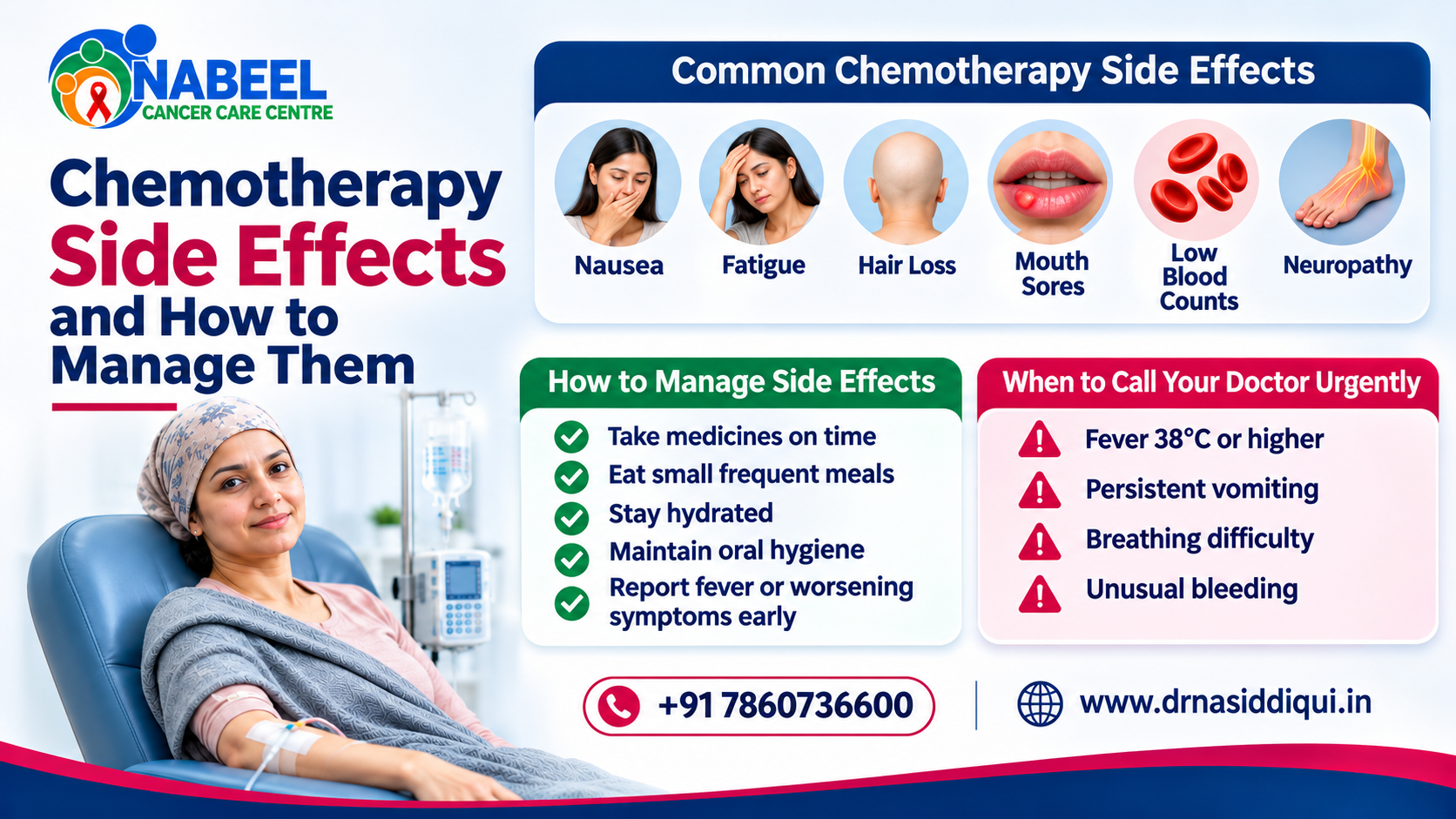
Chemotherapy Side Effects and How to Manage Them in Lucknow
Chemotherapy remains an important treatment for many types of cancer. Depending on the diagnosis and stage, chemotherapy may be used before surgery, after surgery, together with radiation therapy, or to control advanced cancer.
However, one of the biggest concerns patients and families have before starting treatment is:
“What side effects will chemotherapy cause, and how can they be managed?”
The first thing to understand is that not every patient experiences the same chemotherapy side effects.
Some people may experience only mild fatigue or nausea. In contrast, others may develop low blood counts, mouth sores, hair loss, digestive problems or numbness in the hands and feet.
Moreover, the side effects depend on:
- The chemotherapy medicines being used
- The dose
- Number of treatment cycles
- Cancer type
- Other treatments being given
- Patient’s age and general health
- Kidney and liver function
- Other medical conditions
Fortunately, many chemotherapy side effects can now be prevented, reduced or managed with supportive medicines, monitoring and early communication with the oncology team.
Patients looking for treatment information can also read about Chemotherapy in Lucknow with Dr. N. A. Siddiqui.
Why Does Chemotherapy Cause Side Effects?
Chemotherapy medicines target cells that grow and divide rapidly.
Cancer cells often divide rapidly. However, some healthy cells also naturally grow quickly.
For example, chemotherapy can temporarily affect cells in the:
- Bone marrow
- Digestive tract
- Mouth
- Hair follicles
As a result, patients may experience symptoms such as nausea, mouth ulcers, reduced blood counts or hair loss.
Nevertheless, normal cells usually have a much greater ability to recover than cancer cells.
Therefore, many side effects improve between chemotherapy cycles or after treatment is completed.
What Are the Most Common Chemotherapy Side Effects?
Common chemotherapy side effects may include:
- Fatigue
- Nausea
- Vomiting
- Hair loss
- Loss of appetite
- Taste changes
- Mouth ulcers
- Low white blood cells
- Increased infection risk
- Anemia
- Low platelet counts
- Diarrhea
- Constipation
- Tingling or numbness in the hands and feet
- Skin or nail changes
- Memory and concentration problems
However, this list does not mean every patient will experience all these problems.
Instead, your medical oncologist should explain the most likely side effects of your specific chemotherapy regimen.
1. Nausea and Vomiting After Chemotherapy
Nausea and vomiting are among the side effects patients commonly worry about.
Fortunately, modern anti-nausea medicines can significantly reduce these symptoms.
These medicines are known as antiemetics.
Depending on the chemotherapy regimen, anti-nausea medicine may be given:
- Before chemotherapy
- During chemotherapy
- After chemotherapy
- At home for several days
Therefore, take your anti-nausea medicines exactly according to your oncology team’s instructions.
How to Manage Chemotherapy Nausea
Helpful measures may include:
- Eat smaller meals more frequently
- Avoid very heavy meals
- Eat slowly
- Drink adequate fluids
- Avoid food smells that trigger nausea
- Choose simple foods when nausea is worse
- Take prescribed anti-nausea medicines on schedule
Furthermore, do not wait until nausea becomes severe before informing your doctor.
If one medicine is not controlling the symptoms adequately, the anti-nausea plan can sometimes be adjusted.
When Should Vomiting Be Reported?
Contact your oncology team if:
- Vomiting continues repeatedly
- You cannot keep water or liquids down
- You cannot take prescribed medicines
- Urination becomes significantly reduced
- You feel dizzy or very weak
Persistent vomiting can lead to dehydration.
Therefore, it should not simply be tolerated until the next chemotherapy visit.
2. Fatigue During Chemotherapy
Fatigue is one of the most common side effects during cancer treatment.
Chemotherapy-related fatigue may feel different from ordinary tiredness.
For example, a patient may experience:
- Low energy
- Reduced stamina
- Weakness
- Difficulty doing routine activities
- Tiredness despite adequate sleep
However, chemotherapy itself is not always the only cause.
Fatigue may also be related to:
- Anemia
- Poor nutrition
- Dehydration
- Infection
- Pain
- Sleep disturbance
- Cancer itself
Therefore, persistent or severe fatigue should be discussed with your oncology team.
How to Manage Chemotherapy Fatigue
Consider:
- Planning important work when energy is highest
- Taking short rest periods
- Maintaining a regular sleep schedule
- Asking family members for support
- Eating adequate calories and protein
- Maintaining hydration
- Staying physically active as tolerated
Interestingly, complete bed rest is not always helpful.
Instead, gentle physical activity such as walking may help some patients maintain strength when medically appropriate.
Patients with persistent fatigue, pain, appetite loss or multiple treatment-related symptoms may also benefit from Palliative Cancer Care in Lucknow.
3. Low White Blood Cells and Infection Risk
Some chemotherapy medicines temporarily reduce white blood cells.
In particular, chemotherapy may reduce neutrophils, which help the body fight infection.
This condition is called neutropenia.
As a result, an infection that would normally be minor can become serious during periods when the white blood-cell count is low.
Fever During Chemotherapy
A fever of 38°C or higher during chemotherapy should be treated as an important warning sign.
Therefore, patients should contact their oncology team promptly rather than simply taking fever medicine and waiting.
Other Infection Warning Signs
Contact your oncology team if you develop:
- Chills
- New cough
- Sore throat
- Burning while passing urine
- Diarrhea
- New mouth sores
- Redness around an IV line or chemotherapy port
- Rapid worsening of general health
Importantly, infection during chemotherapy can sometimes require urgent treatment.
How to Reduce Infection Risk
Helpful precautions may include:
- Wash hands regularly
- Maintain good oral hygiene
- Avoid close contact with people who are clearly unwell
- Follow safe food-handling practices
- Keep wounds clean
- Follow instructions regarding chemotherapy lines or ports
Additionally, your doctor may check blood counts before a chemotherapy cycle.
If counts are too low, treatment may occasionally need to be delayed or modified depending on the clinical situation.
4. Hair Loss During Chemotherapy
Not every chemotherapy medicine causes hair loss.
Some treatments may cause:
- No noticeable hair loss
- Mild thinning
- Partial hair loss
- Significant hair loss
Hair loss can involve:
- Scalp hair
- Eyebrows
- Eyelashes
- Facial hair
- Body hair
Fortunately, chemotherapy-related hair loss is usually temporary.
Hair commonly begins to grow again after treatment.
How to Care for Hair and Scalp
Consider:
- Using mild shampoo
- Avoiding harsh hair chemicals
- Limiting excessive heat
- Using a soft brush
- Protecting the scalp from direct sunlight
Patients may also choose a scarf, cap, wig or other head covering according to personal preference.
5. Mouth Sores During Chemotherapy
Some chemotherapy medicines can cause inflammation of the mouth called oral mucositis.
Symptoms may include:
- Mouth ulcers
- Pain
- Burning
- Dry mouth
- Difficulty eating
- Difficulty swallowing
- Taste changes
How to Manage Chemotherapy Mouth Sores
Helpful measures may include:
- Use a soft toothbrush
- Maintain gentle oral hygiene
- Drink adequate fluids
- Eat soft foods when necessary
- Avoid foods that irritate sores
- Avoid tobacco
- Avoid alcohol-containing mouth products unless recommended
Your oncology team may prescribe specific mouth rinses or medicines depending on the cause and severity.
Moreover, tell your doctor if mouth sores become severe enough to interfere with drinking or eating.
6. Loss of Appetite and Taste Changes
Some patients notice that food tastes different during chemotherapy.
For example, food may taste:
- Metallic
- Bitter
- Bland
- Unusual
Additionally, nausea, fatigue or mouth sores can reduce appetite.
Therefore, patients may unintentionally lose weight during treatment.
How to Maintain Nutrition
Consider:
- Eating smaller meals more frequently
- Choosing protein-rich foods
- Eating when appetite is strongest
- Maintaining adequate fluid intake
- Choosing softer foods if the mouth is painful
However, nutrition should be individualized.
For example, a patient with diabetes, kidney disease or severe diarrhea may require different dietary advice.
Consequently, significant or progressive weight loss should be discussed with the treating team.
7. Diarrhea During Chemotherapy
Some chemotherapy medicines can irritate the gastrointestinal tract.
As a result, diarrhea can occur.
However, diarrhea can also result from:
- Infection
- Antibiotics
- Other medicines
- The cancer itself
Persistent diarrhea can lead to:
- Dehydration
- Weakness
- Electrolyte imbalance
- Weight loss
Therefore, tell your oncology team if diarrhea is frequent, severe or persistent.
Diarrhea combined with fever, severe weakness or inability to drink fluids requires prompt medical assessment.
8. Constipation During Chemotherapy
In contrast, some patients develop constipation.
Potential causes include:
- Chemotherapy
- Anti-nausea medicines
- Pain medicines
- Reduced movement
- Reduced food intake
- Low fluid intake
Helpful measures may include adequate hydration, appropriate physical activity and medicines prescribed by the treating team.
However, severe abdominal pain, vomiting, increasing abdominal swelling or inability to pass stool or gas should not be repeatedly treated at home without medical advice.
9. Numbness and Tingling – Chemotherapy Neuropathy
Certain chemotherapy drugs can affect peripheral nerves.
This is called chemotherapy-induced peripheral neuropathy.
Possible symptoms include:
- Tingling in fingers or toes
- Numbness
- Burning sensations
- Pins-and-needles sensation
- Increased sensitivity
- Difficulty handling small objects
- Balance problems
Importantly, tell your oncologist as soon as these symptoms begin.
The reason is that neuropathy can become more significant after additional chemotherapy doses.
Depending on severity, the oncologist may consider:
- Monitoring
- Symptom treatment
- Dose modification
- Treatment delay
- Changing the regimen in selected circumstances
Therefore, do not wait until numbness becomes severe before reporting it.
10. Anemia During Chemotherapy
Chemotherapy can sometimes reduce red blood-cell production.
Consequently, hemoglobin can fall.
Symptoms of anemia may include:
- Fatigue
- Weakness
- Dizziness
- Breathlessness
- Palpitations
- Reduced exercise tolerance
However, there are several possible causes of anemia during cancer treatment.
Therefore, blood tests are required to understand the cause and severity.
11. Low Platelets and Bleeding
Platelets help blood to clot.
Some chemotherapy medicines can temporarily reduce platelet levels.
As a result, patients may experience:
- Easy bruising
- Nosebleeds
- Gum bleeding
- Small red or purple spots on the skin
- Prolonged bleeding
Report unusual or persistent bleeding to your oncology team.
Furthermore, do not start aspirin or another medicine that can increase bleeding risk without discussing it with your doctor.
12. Skin and Nail Changes
Certain chemotherapy medicines can cause:
- Dry skin
- Rash
- Nail discoloration
- Brittle nails
- Increased sensitivity to sunlight
Most changes are manageable.
However, severe rash, blistering, swelling or signs of infection require medical evaluation.
13. Memory and Concentration Changes
Some patients experience temporary problems with:
- Concentration
- Short-term memory
- Multitasking
- Finding words
- Mental speed
This is sometimes called “chemo brain.”
However, fatigue, stress, poor sleep and other medicines can also contribute.
Helpful measures may include:
- Using reminders
- Writing important information down
- Performing one task at a time
- Maintaining adequate sleep
- Managing fatigue
Persistent cognitive problems should be discussed with the treating team.
14. Fertility and Sexual Health
Certain chemotherapy drugs can affect fertility.
The risk depends on:
- Type of chemotherapy
- Dose
- Patient age
- Sex
- Duration of treatment
Therefore, patients who may want children in the future should ideally discuss fertility preservation before starting chemotherapy, whenever the clinical situation allows.
Chemotherapy can also influence:
- Menstrual cycles
- Menopausal symptoms
- Sexual function
- Libido
These are important aspects of cancer care and can be discussed openly with the oncology team.
Can Chemotherapy Side Effects Be Prevented?
Not every side effect can be completely prevented.
However, many can be reduced with appropriate supportive care.
For example, treatment may include:
- Anti-nausea medicines
- Hydration
- Regular blood tests
- Growth-factor medicines in selected patients
- Mouth care
- Nutrition support
- Pain management
- Symptom-specific medicines
In addition, close monitoring allows doctors to identify problems before they become more severe.
Patients who can receive treatment without hospital admission may be suitable for Day Care Chemotherapy in Lucknow, where treatment planning may include pre-treatment assessment, blood-test review when indicated, pre-medications, chemotherapy administration and observation.
Do Severe Side Effects Mean Chemotherapy Is Working Better?
No.
This is a common misconception.
Severe nausea, hair loss or fatigue does not mean chemotherapy is killing more cancer cells.
Likewise, having only mild side effects does not mean the treatment is ineffective.
Instead, doctors evaluate treatment response using appropriate methods such as:
- Clinical examination
- Imaging
- Blood tests
- Tumor markers in selected cancers
Therefore, patients should not compare the effectiveness of treatment according to how sick they feel.
Should Chemotherapy Be Stopped Because of Side Effects?
Do not stop chemotherapy on your own.
Instead, report side effects to your medical oncologist.
Depending on the problem, the treatment team may consider:
- Supportive medicines
- Dose adjustment
- Temporary delay
- Schedule modification
- Change in chemotherapy medicine
The appropriate decision depends on the cancer, treatment goal and severity of the side effect.
Therefore, chemotherapy side effects should be reported early rather than silently tolerated.
Can You Take Vitamins or Supplements During Chemotherapy?
Do not assume that vitamins, herbal medicines, Ayurvedic preparations or other supplements are automatically safe during chemotherapy.
Some products may interact with anti-cancer medicines or affect:
- Liver function
- Kidney function
- Blood clotting
- Drug metabolism
Therefore, show your oncology team a complete list of:
- Prescription medicines
- Over-the-counter medicines
- Vitamins
- Herbal medicines
- Nutritional supplements
before starting anything new.
What Should You Eat During Chemotherapy?
There is no universal “chemotherapy diet.”
Instead, nutrition should focus on maintaining:
- Adequate calories
- Protein
- Hydration
- Healthy body weight
However, the exact diet may change according to symptoms.
For example, someone with mouth sores may prefer softer food.
In contrast, a patient with diarrhea or constipation may require different dietary advice.
Therefore, individualized nutrition is usually more useful than following restrictive internet diets.
When Should You Contact Your Doctor Urgently?
During chemotherapy, some symptoms should not wait until the next routine appointment.
Contact your oncology team promptly if you develop:
- Fever of 38°C or higher
- Chills
- Significant breathing difficulty
- Persistent vomiting
- Inability to drink fluids
- Severe or persistent diarrhea
- Unusual bleeding
- Severe weakness
- Confusion
- Very low urine output
- Severe mouth sores preventing drinking
- New signs of infection
- Rapidly worsening symptoms
Infections during chemotherapy can become serious, particularly when neutrophil counts are low. Therefore, fever requires prompt attention.
Preparing for Your Chemotherapy Session in Lucknow
Before starting treatment, patients should understand:
- Which chemotherapy drugs will be given
- Why chemotherapy is required
- How many cycles are planned
- How often treatment will be given
- Which side effects are most likely
- Which blood tests are required
- Which symptoms require an urgent phone call
- Which medicines should be taken at home
Moreover, bring a complete list of your current medicines and supplements.
Treatment planning may also involve blood counts, kidney and liver tests and other investigations depending on the chemotherapy regimen. Dr. Siddiqui’s chemotherapy service page describes individualized planning and monitoring as part of chemotherapy care in Lucknow.
Chemotherapy Treatment in Lucknow – Dr. N. A. Siddiqui
Dr. N. A. Siddiqui is a Consultant Medical Oncologist & Hematologist in Lucknow.
His qualifications include:
- MBBS
- MD (Medicine)
- DNB (Medical Oncology)
- MRCP (UK)
- PDCR
- Certificate in Immuno-Oncology
- ESMO Certified Medical Oncologist
His medical oncology practice includes:
- Chemotherapy
- Immunotherapy
- Targeted therapy
- Hormone therapy
- Treatment monitoring
- Management of treatment-related side effects
- Advanced and metastatic cancer care
- Supportive oncology care
Chemotherapy plans are individualized according to cancer type, stage, pathology, previous treatment, organ function and overall health.
For detailed information, visit Chemotherapy in Lucknow – Dr. N. A. Siddiqui.
Patients who require outpatient chemotherapy can also learn about Day Care Chemotherapy in Lucknow.
For broader cancer-treatment consultation, visit Cancer Doctor in Lucknow – Dr. N. A. Siddiqui.
Nabeel Cancer Care Centre
529A/142, Sant Kabir Lane, In Front of Farabi Restaurant, Khurram Nagar, Lucknow – 226022
Appointment: +91 7860736600
Website: www.drnasiddiqui.in
Frequently Asked Questions
What are the most common chemotherapy side effects?
Common side effects include nausea, fatigue, hair loss, low blood counts, infection risk, mouth sores, appetite changes, diarrhea, constipation and neuropathy. However, the exact side effects depend on the chemotherapy medicines being used.
Is chemotherapy very painful?
Chemotherapy itself is generally not expected to be painful while it is being administered. However, some patients may experience side effects afterward. Any pain, burning or swelling around an IV site during treatment should be reported immediately.
Does everyone lose hair during chemotherapy?
No. Hair loss depends on the chemotherapy drug. Some treatments cause major hair loss, while others cause thinning or little noticeable change.
Can chemotherapy nausea be controlled?
Yes. Modern anti-nausea medicines can prevent or substantially reduce nausea for many patients.
What temperature is dangerous during chemotherapy?
A temperature of 38°C or higher during chemotherapy can indicate infection and should be reported promptly to the oncology team.
What is chemotherapy neutropenia?
Neutropenia means the number of neutrophils—important infection-fighting white blood cells—has become low. This can increase infection risk.
Can chemotherapy cause mouth ulcers?
Yes. Some chemotherapy medicines can cause oral mucositis, leading to mouth pain, sores and difficulty eating.
Can chemotherapy cause numbness in the hands and feet?
Yes. Certain chemotherapy medicines can cause peripheral neuropathy. Therefore, tingling or numbness should be reported early.
Do chemotherapy side effects mean treatment is working?
No. The severity of side effects does not reliably indicate how well chemotherapy is treating the cancer.
Can chemotherapy side effects be managed at home?
Many mild side effects can be managed at home with the treatment team’s instructions. However, fever, significant bleeding, severe vomiting, breathing difficulty or rapid deterioration require prompt medical advice.
Can I take Ayurvedic or herbal medicines during chemotherapy?
Do not start herbal, Ayurvedic, vitamin or nutritional supplements without informing your medical oncologist because some products can interact with cancer treatment.
Where can I receive chemotherapy in Lucknow?
Depending on the treatment regimen and patient’s condition, chemotherapy may be provided in a day-care or hospital setting. Patients can learn more at Day Care Chemotherapy in Lucknow.
Conclusion
Chemotherapy affects every patient differently.
Therefore, having chemotherapy does not mean you will experience every possible side effect.
Common problems such as:
- Nausea
- Fatigue
- Hair loss
- Mouth sores
- Low blood counts
- Infection risk
- Appetite changes
- Diarrhea
- Constipation
- Neuropathy
can often be prevented, reduced or actively managed.
Most importantly, report symptoms early.
Early communication allows your oncology team to determine whether a symptom is an expected chemotherapy side effect or a problem requiring further investigation.
Furthermore, fever of 38°C or higher, severe breathing difficulty, significant bleeding, persistent vomiting or rapid worsening should be treated as important warning signs during chemotherapy.
Patients seeking chemotherapy treatment or side-effect management in Lucknow can consult Dr. N. A. Siddiqui, Consultant Medical Oncologist & Hematologist, for individualized cancer-treatment planning and supportive oncology care.